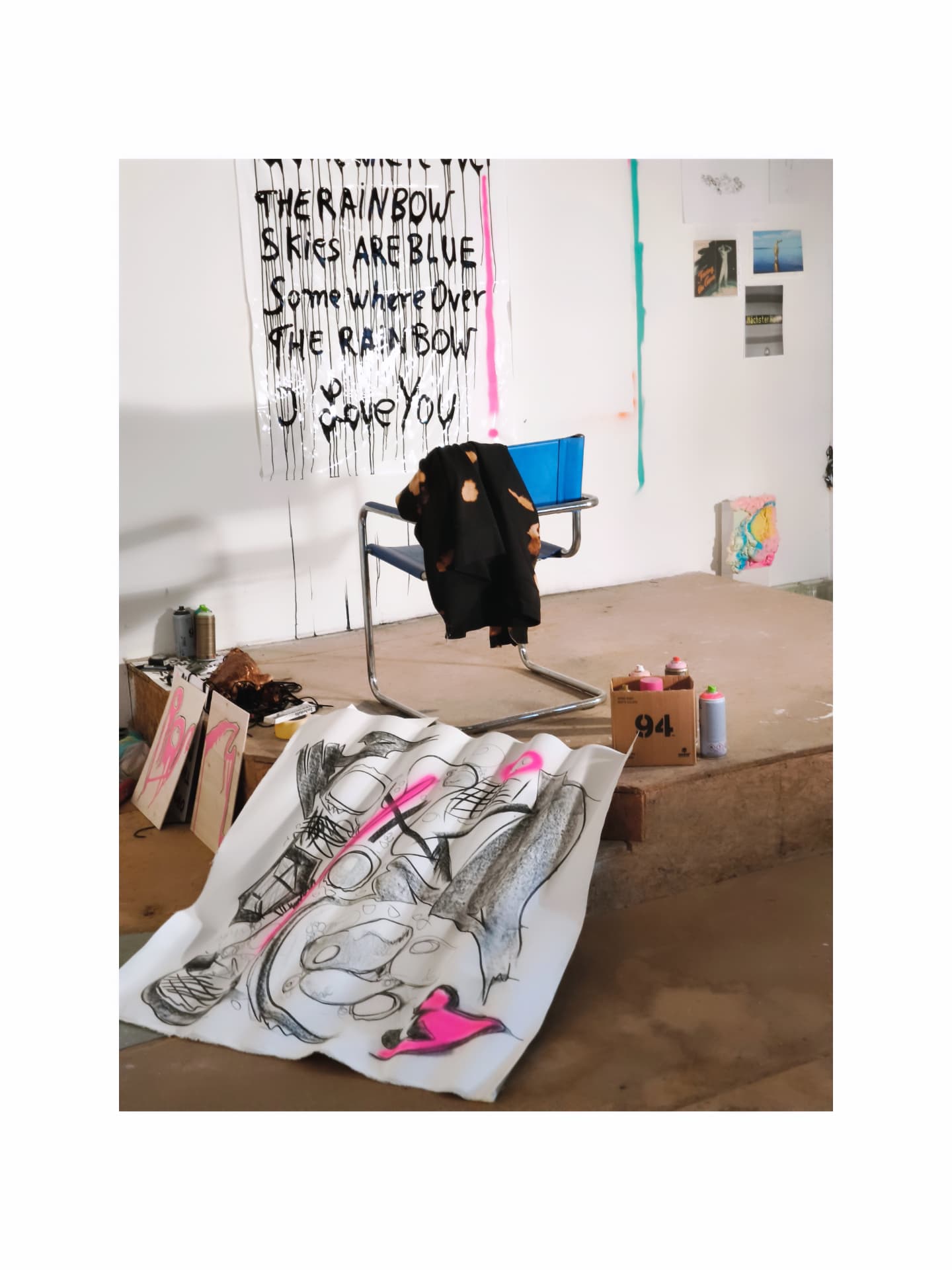
I Never Had A Chance Not To Be An Artist
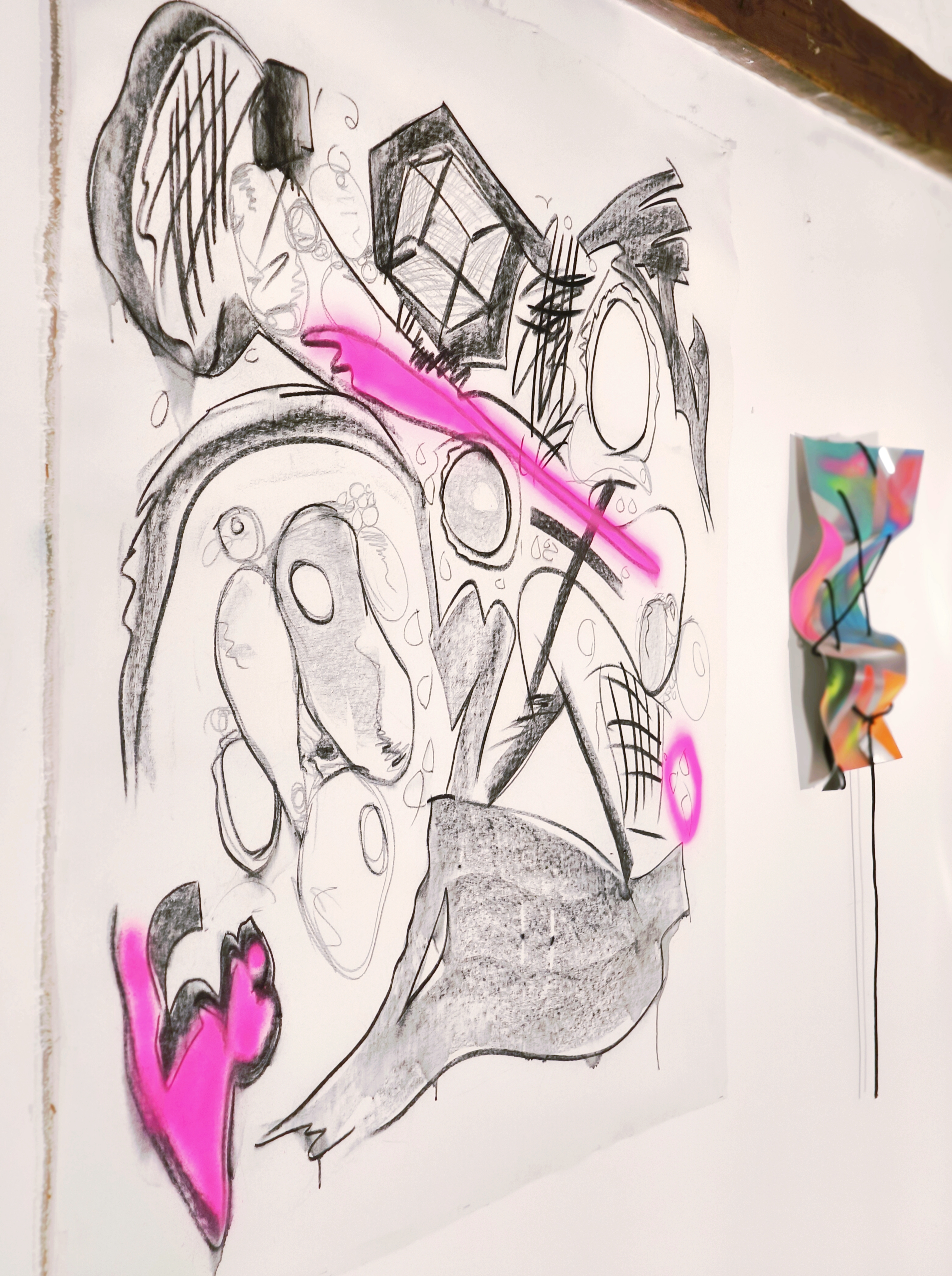
The title sounds like a confession, and at the same time like a statement that preceded no conscious decision. I Never Had a Chance Not to Be an Artist describes not a romantic ideal of the artist, but a biography in which art was not chosen, but lived. It speaks of growing up within structures in which expression is not a luxury, but a necessity.
The work moves within the tension between determinism and self-empowerment. The statement can be read as a limitation, suggesting that external circumstances, origins, or social conditioning left little room for alternatives. At the same time, it conveys a quiet strength: when art is not an escape but a point of departure, it becomes the fundamental language of one’s own existence.
Within the tradition of autobiographically informed approaches in contemporary art, this perspective evokes artists such as Tracey Emin, who translates personal experience directly into artistic form. Jean-Michel Basquiat’s work likewise reveals how artistic creation can emerge from an inner and outer compulsion—from the impossibility of remaining silent.
Formally, the work derives its power from its directness. The sentence itself becomes the material: language functions not as description, but as an assertion. This reduction lends the work a clarity that nevertheless remains open to projection. Who is speaking here? Is it an individual voice, or does it stand as a representative of many biographies in which art is inextricably linked to survival, identity, and visibility?
In the context of contemporary art, the work can be understood as a reflection on authorship and the conditions under which art is made. It raises the question of the extent to which artistic practice is truly a matter of free choice—or whether it often arises from social, cultural, or emotional necessities.
Thus, I Never Had a Chance Not to Be an Artist deliberately remains ambivalent: poised between fate and choice, between compulsion and freedom. It is precisely within this tension that the work finds its resonance.
German Version:
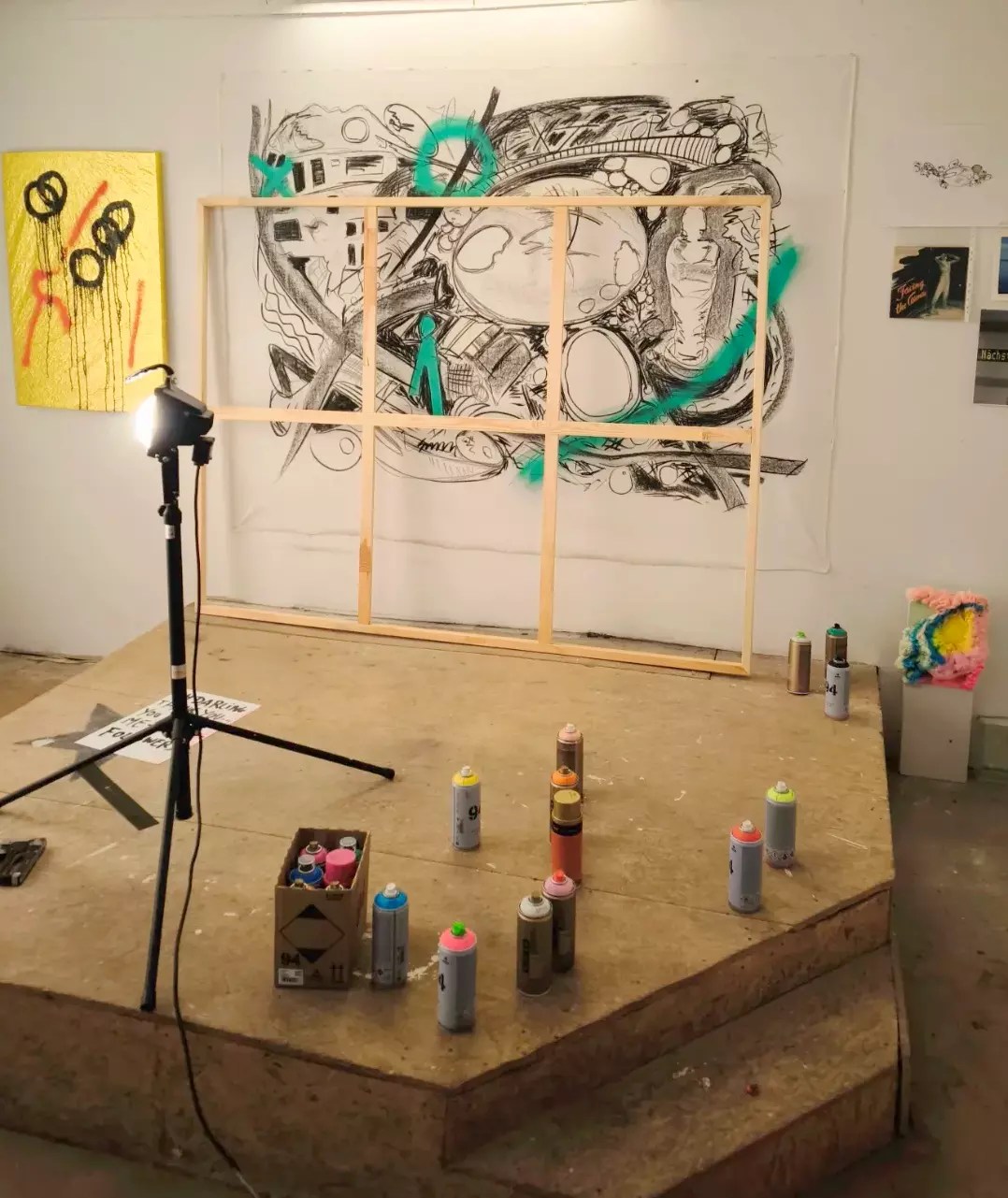
Der Titel klingt wie ein Bekenntnis, und zugleich wie eine Feststellung, der keine Entscheidung vorausging. I never had a chance not to be an artist beschreibt kein romantisches Künstlerideal, sondern eine Biografie, in der Kunst nicht gewählt, sondern gelebt wurde. Es geht um ein Aufwachsen in Strukturen, in denen Ausdruck kein Luxus ist, sondern Notwendigkeit.
Das Werk bewegt sich im Spannungsfeld zwischen Determination und Selbstermächtigung. Die Aussage kann als Einschränkung gelesen werden, als Hinweis darauf, dass äußere Umstände, Herkunft oder soziale Prägung kaum Alternativen ließen. Gleichzeitig liegt darin eine stille Stärke: Wenn Kunst kein Ausweg, sondern Ausgangspunkt ist, wird sie zur grundlegenden Sprache der eigenen Existenz.
In der Tradition autobiografisch geprägter Positionen der Gegenwartskunst erinnert dieser Ansatz an Künstler*innen wie Tracey Emin, die persönliche Erfahrung unmittelbar in künstlerische Form übersetzen. Auch bei Jean-Michel Basquiat wird deutlich, wie sehr künstlerisches Schaffen aus einem inneren und äußeren Zwang heraus entstehen kann – aus der Unmöglichkeit, nicht zu sprechen.
Formal lebt das Werk von seiner Direktheit. Der Satz selbst wird zum Material: Sprache fungiert nicht als Beschreibung, sondern als Setzung. Diese Reduktion verleiht der Arbeit eine Klarheit, die gleichzeitig offen bleibt für Projektion. Wer spricht hier? Ist es eine einzelne Stimme, oder steht sie stellvertretend für viele Biografien, in denen Kunst untrennbar mit Überleben, Identität und Sichtbarkeit verbunden ist?
Im Kontext zeitgenössischer Kunst lässt sich das Werk als Reflexion über Autorschaft und Bedingungen des Kunstmachens lesen. Es stellt die Frage, inwiefern künstlerische Praxis tatsächlich eine freie Wahl ist – oder ob sie oft aus sozialen, kulturellen oder emotionalen Notwendigkeiten hervorgeht.
So bleibt I never had a chance not to be an artist bewusst ambivalent: zwischen Schicksal und Entscheidung, zwischen Zwang und Freiheit. Gerade in dieser Spannung entfaltet das Werk seine Resonanz.
© Gerd G. M. Brockmann
https://www.instagram.com/artprojectbrockmann